How to Ask a Client for Payment (Without Feeling Awkward)
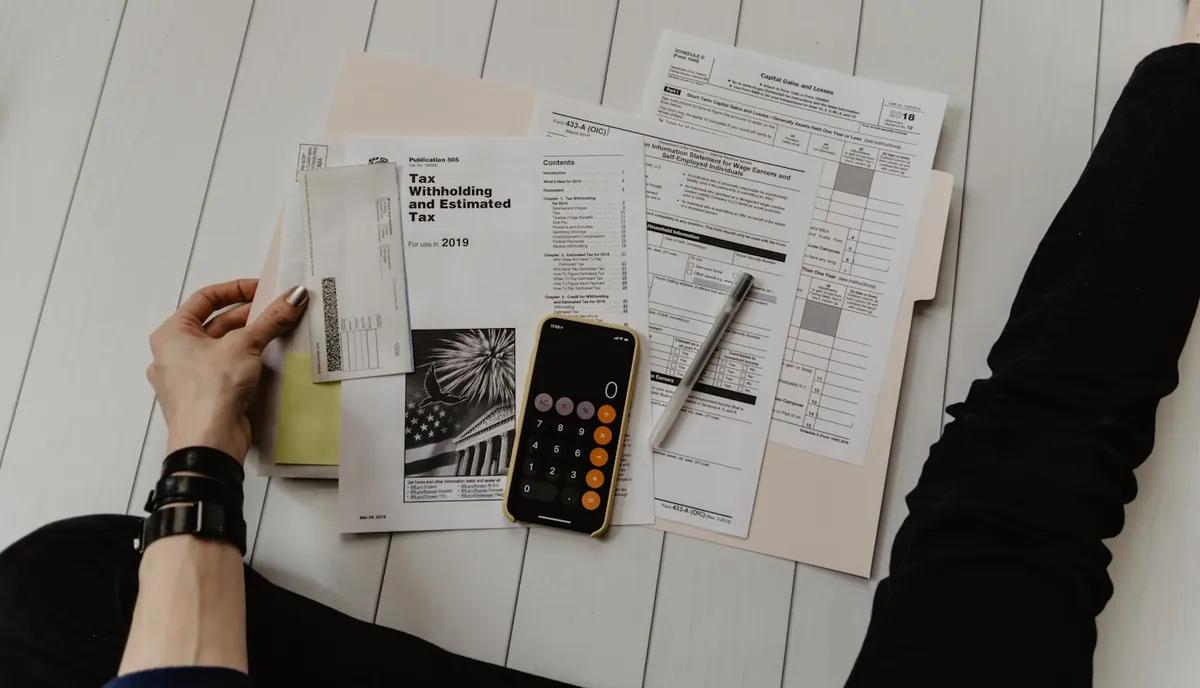
85% of freelancers are paid late. Not because clients are bad people — but because freelancers freeze when it's time to ask for money. The email sits in drafts. The anxiety builds. And the invoice ages while you're mentally writing and rewriting an email you never send.
The problem isn't you. And it isn't your client. It's that nobody taught us how to ask for payment professionally. Here's the system that works — at every stage, for every client type. If you're wondering whether it's even okay to chase clients for payment, read that first.
Why asking for payment feels so hard
There's actual psychology behind it. As a freelancer, you occupy two roles simultaneously: creative professional and business owner. The first role wants to be liked and hired again. The second role needs to enforce payment terms.
When those roles conflict, the creative usually wins — and the invoice goes unchased. Research from the Freelancers Union found that 71% of freelancers have struggled to get paid at some point, with an average of $5,968 in unpaid invoices per freelancer.
The fix is having a system that removes the emotional friction. When you know exactly what to send and when to send it, asking for payment becomes a mechanical step — not an emotional one.
The 4-step escalation ladder
Most freelancers either chase too aggressively (damaging relationships) or too passively (never getting paid). The right approach is a calibrated escalation — each step more direct than the last, with clear triggers for when to move to the next level. For exact copy-paste templates at each stage, see our late payment email examples.
Step 1: The soft check (days 1–3)
At this stage, assume good faith. The client may have missed the email, their accounting department might be slow, or the invoice landed in spam. Your goal is not to demand payment — it's to confirm the invoice arrived and ask if anything is needed on your end.
EXAMPLE
Subject: Invoice #1042 for the homepage redesign
Message: Hi David — quick note that invoice #1042 for the homepage redesign went out last week. Making sure it landed in the right inbox and you've got everything you need on your end. Can you confirm you received it?
Notice what this email doesn't do: it doesn't start with “I”, doesn't use “just checking in” or “sorry to bother you”, and doesn't make an explicit demand. It frames the message as a delivery check — which gives the client an easy way to respond without feeling accused.
Step 2: The clear ask (days 7–10)
If you haven't heard back, it's time to be more direct. Reference your previous message factually, state the overdue timeframe, and ask for a specific commitment: a payment date. This is not aggressive — it's clear.
EXAMPLE
Subject: Invoice #1042 — following up
Message: Hi David — invoice #1042 for the homepage redesign ($4,200) is now 10 days past due. I reached out last week but haven't heard back. Can you give me a sense of when this one's getting processed? Happy to resend if it got buried.
The key words here: “can you give me a sense of when” — this demands a concrete answer. Not “soon” or “next week sometime.” A date.
Step 3: The consequence email (days 21–30)
After three weeks with no payment and no response, you need to attach a consequence. The most effective one for freelancers: pausing work. It's not a threat — it's a business reality. You can't continue delivering without being paid.
EXAMPLE
Subject: Invoice #1042 — 3 weeks, need to resolve
Message: Hi David — invoice #1042 for $4,200 is now three weeks past due with no response to two prior messages. If I don't hear back with a concrete payment date by Friday, I'll need to pause active work until it clears. I'd much rather sort this out directly — what's the soonest you can get this through?
Step 4: Final notice (days 35+)
At this stage, the relationship is already damaged — by their non-payment, not by your follow-up. Send a formal notice with a hard deadline. Reference your contract's late payment terms. State what happens next: collections, legal escalation, or formal demand letter.
EXAMPLE
Subject: Invoice #1042 — 5 weeks, requires resolution
Message: David — invoice #1042 for $4,200 is now five weeks past due. Despite multiple attempts to resolve this, I haven't received payment or a response. If payment isn't received by end of week, this will be escalated to formal collections per our agreement. You can settle online at [link] or reply here with any questions.
The one thing that gets clients to pay faster
Every effective payment request has one thing in common: a specific ask for a concrete answer. Not “please pay soon.” Not “let me know.” But: “Can you confirm the date this will be processed?”
When you ask for a date, you force the conversation out of the vague “I'll get to it” zone and into the specific “I'll have an answer by Tuesday” zone. That shift — from vague to specific — is where payments actually happen.
When to stop being polite
Politeness has a shelf life. After 21 days with no response to multiple messages, warmth becomes permission to ignore. At that point, you're not protecting a relationship — you're enabling non-payment. A firm, factual email with clear consequences is not rude. It's professional. Learn how to strike the right tone — firm enough to get paid, warm enough to keep the relationship.
Stop writing these emails from scratch.
BidPropel generates the exact follow-up email for your situation — calibrated to your client relationship, the amount, and how late they are. Copy and send in 30 seconds.
Generate your email now — free ?Written by Muhammad Miqdad
Founder, BidPropel
Muhammad is a full-stack AI engineer who built BidPropel after experiencing firsthand how much time freelancers waste on proposals that get ignored and invoices that go unpaid. He writes about AI tools, freelance business strategy, and getting paid on time.
More about the author →Frequently asked questions
- How do I ask a client for payment professionally?
- Start with a gentle, benefit-of-the-doubt email 1-3 days after the due date. Reference the invoice number and project name specifically. Ask one direct question: "Can you confirm you received this?" or "When can I expect payment?" Avoid weak language like "just checking in" or "sorry to bother you." If no response after 7 days, send a firmer follow-up that references the prior message and asks for a concrete payment date.
- What if my client ignores my payment request?
- If a client ignores your first reminder, wait 7 days and send a second email that is firmer and more direct. Reference your first message factually ("I reached out last week about invoice #..."). Ask for a specific payment date. If still no response after 21+ days, send a final notice stating clear consequences: pausing work, late fees per your contract, or formal collections.
- Is it normal to feel awkward asking for payment?
- Yes — it is extremely common. Research shows 85% of freelancers are paid late, and the emotional friction of asking for money is one of the most cited reasons freelancers delay following up. The key is having a system: pre-written templates, a follow-up schedule, and the understanding that you are not "bothering" anyone — you are providing a professional service and deserve to be paid for it.
- When should I send my first payment reminder?
- Send your first reminder 1-3 days after the invoice due date. This gives the client a short grace period (in case of weekends, holidays, or internal processing delays) while keeping the invoice top of mind. Waiting longer than a week signals that late payment is acceptable.
- How do I write a gentle payment reminder email?
- A gentle payment reminder frames the message as a delivery check rather than a payment demand. Open with the invoice number and project name (not "I" or "I'm following up"). Make sure they received the invoice and have everything they need. End with an easy question: "Can you confirm you received this?" Keep it under 70 words.